Choosing a general contractor is one of the highest-stakes decisions you'll make as a homeowner. The wrong hire can cost you months of delays, unexpected expenses, and legal headaches that follow your property's title for years. The right hire turns a stressful process into a smooth, well-managed build. Here's a clear, no-nonsense framework for evaluating any GC you're considering in Palm Beach County.
Verify Their Florida License
Every general contractor working in Florida must be licensed through the Florida Department of Business and Professional Regulation (DBPR). The verification process takes about 60 seconds and should be your first step before any further conversation: go to myfloridalicense.com, click "Verify a License," and search by the contractor's name or license number. You're looking for an active status — not expired, suspended, or revoked.
There are two types of GC licenses in Florida, and the distinction matters. A Certified General Contractor (license prefix CGC) has passed a state examination and can work anywhere in Florida without county-by-county registration. A Registered General Contractor has met their local county's requirements but is limited to that jurisdiction. For a project in Palm Beach County, either can be appropriate — but if your contractor's license shows as Registered for a different county, that's a red flag that needs an explanation.
The license also tells you whether the contractor can pull building permits under their own name and license number. This matters because pulling a permit means taking legal and professional responsibility for the work. Any general contractor who suggests having a sub-contractor pull the permit — or who asks you to pull an owner-builder permit yourself — is trying to avoid accountability. Walk away.
"The best general contractor isn't always the cheapest bid. It's the one who communicates clearly, pulls their own permits, and treats your home like it's their own."
Demand Proof of Insurance
Insurance is not a formality — it is the legal and financial backstop that protects you if something goes wrong on your job site. There are two policies you need to see before signing any contract: general liability insurance and workers' compensation insurance. Ask for actual certificates of insurance, not verbal assurances. The certificate will show the policy limits, the carrier, and the expiration date. Verify both are current.
For general liability, you want to see a minimum of $1 million per occurrence. This coverage pays for property damage and bodily injury caused by the contractor's operations — if a subcontractor's equipment damages your neighbor's fence, or if someone trips on a hazard on your job site, GL insurance responds. Ask to be named as an additional insured on the policy for the duration of your project. This is a standard request that any reputable contractor will fulfill without hesitation.
Workers' compensation is equally critical. In Florida, an injured worker without workers' comp coverage can file a claim directly against the property where the injury occurred. That means if a framing carpenter hired by your unlicensed or uninsured GC falls from a ladder on your property, you — as the homeowner — can be held financially responsible for their medical bills and lost wages. Workers' comp is not optional; it's the policy that keeps your personal assets out of the equation.
Review Their Portfolio for Similar Projects
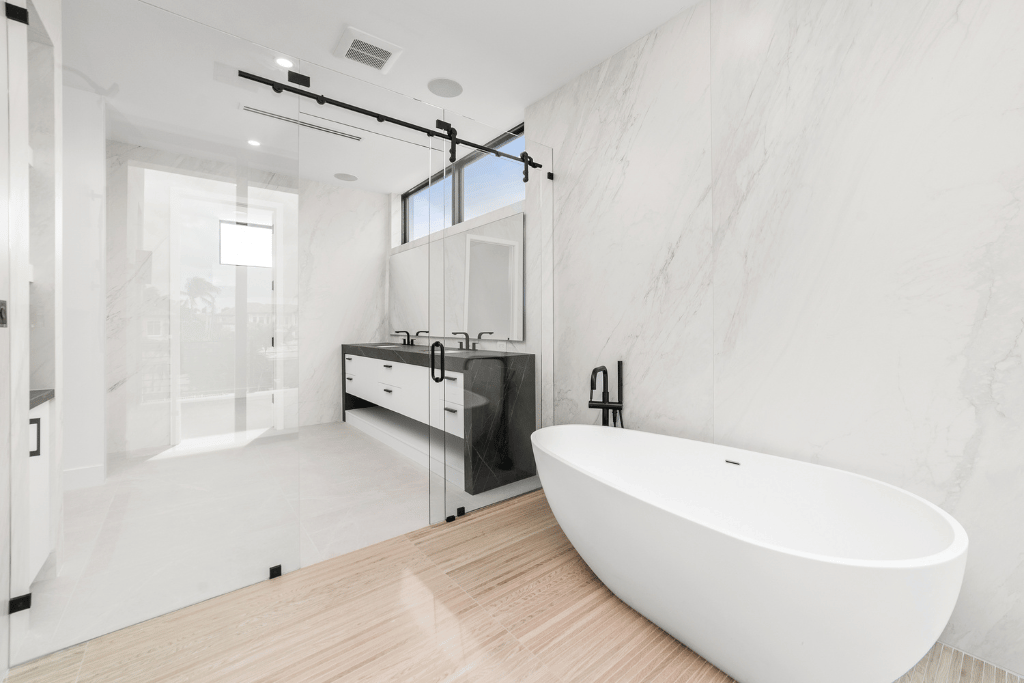
A contractor who builds excellent tract homes may struggle with the design coordination complexity of a fully custom residence. A commercial contractor venturing into high-end residential often underestimates the finish-quality expectations and client-communication demands of luxury homeowners. The portfolio you need to review is not just any past work — it's work that closely resembles your project in scope, scale, and finish level.
Ask to see at least three completed projects that are comparable to yours. For a custom home build in the $1.5M–$3M range, you want to see photos of completed homes in that range, not a $400K renovation used as a portfolio filler. Ask specific questions: How long did the project take from permit issuance to certificate of occupancy? Were there significant change orders, and why? Would those clients hire the contractor again? And then actually call those past clients — a quick 10-minute conversation can reveal more than hours of Googling.
During your portfolio review, pay attention to consistency. Can you tell the contractor manages quality across multiple project types, or does one project look dramatically better than the others? Variation in quality often signals variable supervision — great results when the owner is on site, weaker results when they're not. You want a contractor whose team delivers consistent results regardless of who's watching.
Evaluate Communication Style Early
How a contractor communicates before you've signed a contract is a very reliable preview of how they'll communicate once they have your deposit. Do they respond to your first inquiry within 24 hours? Do they answer your questions directly, or do they hedge and redirect? Do they show up to the initial meeting prepared, having reviewed the project information you sent in advance? These early signals are not incidental — they reflect the habits and culture of the business.
One of the most common complaints homeowners have mid-project is not about construction quality — it's about communication. They feel in the dark. They can't get a straight answer on the schedule. Nobody told them the windows were delayed until it was already impacting framing. A good contractor proactively communicates problems as soon as they're aware of them, not after they've escalated into crises. Ask specifically how they handle schedule delays and change orders — a contractor who has thought about this will have a clear, practiced answer.
Before signing, confirm who your single point of contact will be throughout the project. On larger custom homes, this should be a dedicated project manager or superintendent — not the owner who is also running four other projects. Understand how they share progress updates: weekly written reports, a shared project management app, or scheduled site visits with you? There's no single right answer, but the answer should be clear and consistent. Ambiguity about communication process before the project starts almost always becomes a source of frustration during it.
Get Every Detail in the Contract
A construction contract that says "kitchen remodel per plans" is not a contract — it's an invitation for disputes. Every material, every finish, and every piece of equipment should be specified by manufacturer, model number, color, and finish. If your contract says "tile per owner selection," make sure the tile has been selected and documented in a finish schedule attached to the contract before signing. Vague specifications allow contractors to substitute cheaper materials without technically violating the agreement.
Payment schedules are one of the highest-risk areas of any construction contract. Never agree to a payment schedule tied to calendar dates — only pay against verified milestones. A typical milestone schedule for a full custom home might look like: 10% at contract signing, 10% at permit issuance, 20% at foundation completion, 20% at frame/rough-in completion, 20% at drywall completion, 15% at substantial completion, and 5% at final punch list and CO. Paying more than 30–40% before significant work is completed gives you almost no leverage if problems arise.
Your contract should also define the lien waiver process explicitly. In Florida, any contractor or supplier who performs work on your property has lien rights against it — meaning if your GC doesn't pay their plumber, the plumber can place a lien on your home. Protect yourself by requiring your GC to provide conditional lien waivers from all major subcontractors and suppliers with each payment application, and unconditional waivers upon final payment. Finally, document exactly how change orders will be handled: written only, signed by both parties, with agreed cost and schedule impact before any additional work begins. Change orders managed informally are one of the leading causes of end-of-project disputes.