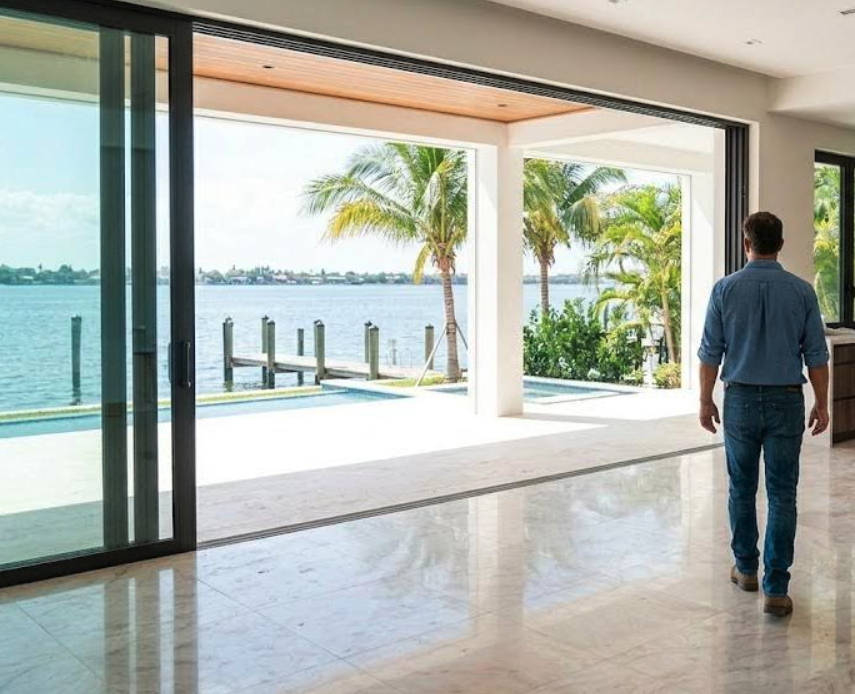
Few decisions weigh on South Florida homeowners like this one. You love the location — the water views, the neighborhood, the lifestyle — but the house itself no longer fits. The floor plan feels dated, the systems are aging, and every hurricane season raises the same question: is it smarter to renovate what you have or start fresh with a ground-up build? There is no universal answer, but there is a clear way to find yours. Here is the framework we walk homeowners through, from Palm City and Jupiter to Delray Beach and Boca Raton.
Start With the Structure You Actually Have
Before you fall in love with a floor plan on paper, find out what is behind the walls. Homes built before the modern Florida Building Code took effect in 2002 — and especially those built before Hurricane Andrew in 1992 prompted stricter wind standards — often lack the roof-to-wall connections, impact-rated openings, and reinforcement that today's coastal construction requires. Decades of salt air add their own toll.
A licensed structural engineer and a thorough pre-construction inspection should answer these questions before any design work begins:
- Foundation & Slab: Cracking, settlement, or drainage problems that point to deeper soil or moisture issues.
- Block Walls & Concrete: Rust staining or spalling concrete, a sign that corroding rebar is expanding inside the structure.
- Roof Framing & Connections: Whether the roof can be tied to the walls to meet current wind requirements, or must be rebuilt.
- Building Systems: Aging electrical panels, original plumbing and drain lines, and HVAC equipment near the end of its life.
If the bones are sound, renovation becomes a compelling option. If the list of required corrections keeps growing, you may be paying to preserve a structure that will cost more to fix than to replace.
Understand the 50% Rule and Local Zoning First
This is the step homeowners most often skip, and it can change everything. Under FEMA's National Flood Insurance Program rules, if a home sits in a mapped flood zone and the cost of a renovation or repair equals or exceeds 50% of the structure's market value (not counting the land), it is considered a "substantial improvement." The entire home must then be brought into compliance with current floodplain standards — which often means elevating the finished floor. Depending on your jurisdiction, improvements may be tracked cumulatively over a set period, so several smaller projects can add up.
Zoning matters just as much for a rebuild. A legally existing home may sit closer to the water or the property line than today's rules allow. Tear it down, and a new structure generally has to meet current setbacks, height limits, lot coverage, and — on barrier-island and oceanfront sites — Coastal Construction Control Line requirements. In some cases, renovating is the only way to keep a prime footprint you could never build today. In others, a rebuild unlocks a better, higher, safer home than any renovation could.
Your local building and zoning departments make the final call, so confirm these rules early — before you commit to design fees or demolition plans.
"The right answer isn't whichever costs less up front — it's whichever gives you the home you want on the lot you love, with the fewest compromises."
Compare the True Cost and Long-Term Value
On paper, renovation looks cheaper. In practice, the gap narrows quickly when the scope includes structural changes, new impact windows and doors, a roof replacement, and new electrical, plumbing, and mechanical systems. Renovation also carries more unknowns: what is hidden inside older walls, slabs, and ceilings tends to surface once demolition begins, which is why a healthy contingency matters.
A rebuild is more predictable. You get new systems, a current-code structure, builder and manufacturer warranties, better energy performance, and the potential for stronger wind-mitigation credits with your insurer. A useful gut check: when your renovation scope starts to approach the cost of a comparable new build, the case for rebuilding gets much stronger.
Ask for both options priced at the same level of finish and with the same scope, so you are comparing like with like. Include the carrying costs — temporary housing, storage, and extra months of mortgage or construction-loan interest — in both scenarios.
Weigh Timeline, Disruption, and How You Want to Live
A major renovation is not necessarily the faster or gentler path. Opening up walls, correcting structural issues, and phasing work around an occupied home can stretch a schedule — and many owners end up moving out anyway. A ground-up build, by contrast, follows a single, well-defined sequence from permit to certificate of occupancy.
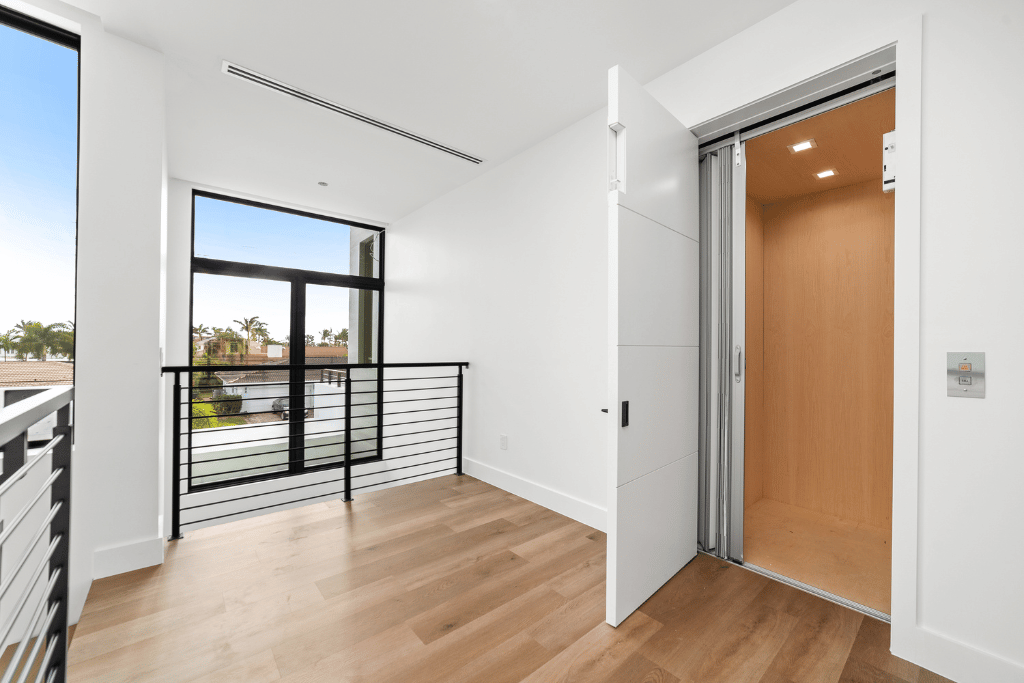
Then there is the lifestyle question. A new build lets you rethink everything: an open plan designed around indoor-outdoor living, a primary suite on the ground floor, elevator-ready framing, smart home infrastructure wired in from day one, and a finished floor set well above flood elevation. Renovation, on the other hand, preserves what you already love — mature landscaping, established character, and the familiarity of a home that already feels like yours.
Be honest about what matters most. If you are hoping to adapt a home to a very different way of living, new construction usually gives you more freedom. If you are mostly refreshing a home you already love, renovation often makes more sense.
Choose a Builder Who Will Give You an Honest Answer
A contractor who only renovates will tend to recommend renovation, and a builder who only builds new will tend to recommend a teardown. Look for a licensed general contractor who does both and is willing to put both options in writing. Verify the license through the Florida Department of Business and Professional Regulation at myfloridalicense.com, ask for proof of insurance, and ask to see completed projects comparable to yours.
The best builders start with the facts: a site and structure evaluation, a review of flood and zoning requirements, and side-by-side budgets. At Edmunds, we would rather tell you honestly that your home should be renovated — or that it should come down — than steer you toward whichever path is more convenient for us.
Not Sure Which Path Is Right for Your Home?
Whether you own a waterfront home in Palm City, a dated estate in Jupiter, or a tired Boca Raton residence on a lot you could never replace, the right plan starts with a clear-eyed look at your property.
Contact our team today to schedule a site evaluation and compare your renovation and rebuild options side by side.